Criminal Case: Mysteries
- 4.6
- Rating
- 5.00M
- Installs
- Free
- Price

 Analysis by App-foxy
I approached Criminal Case: Mysteries of the Past! as a decision rather than simply another free download: do I want a light, story-led mystery game that I can play in short sessions, or am I looking for a deeper adventure with more freedom and less repetition? After spending time with it, my answer is fairly clear. This is an approachable hidden-object investigation game from Pretty Simple, built around murder cases, clue hunting, and a steady sequence of story scenes. It is easy to start, simple to understand, and much more comfortable for casual play than for players demanding a complex detective simulation.
The game sits in the adventure category, but its version of adventure is structured and guided. You are not wandering through a large open world or deciding every move in a branching investigation. Instead, you examine scenes, look for relevant objects, collect evidence, and move the case forward through conversations and story beats. That focused design is exactly why I found it relaxing in small doses, although it also explains why someone seeking unrestricted exploration may lose interest.
What to consider before choosing it
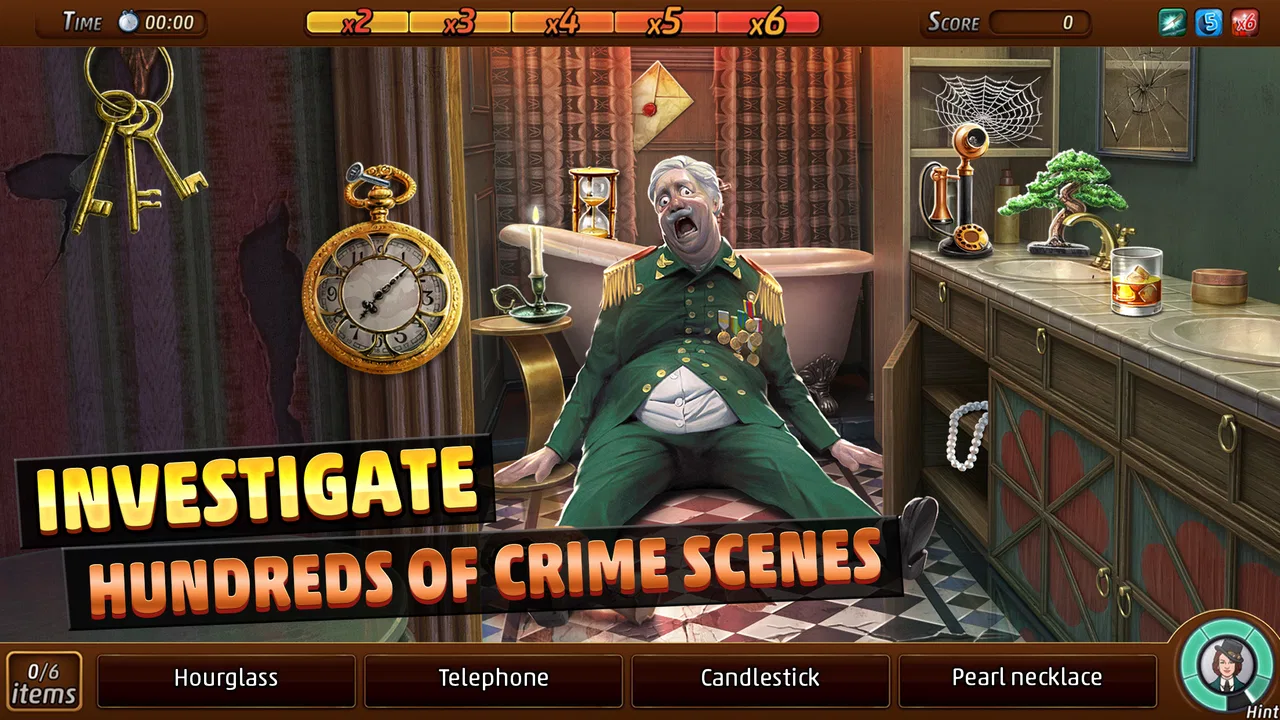
The first question is how you feel about hidden-object games. The central activity asks you to inspect busy scenes and identify items under pressure or within a limited flow. If you enjoy scanning an image, remembering where objects are placed, and gradually making sense of a case, the basic loop is satisfying. If searching the same kind of scene repeatedly feels like work, the attractive crime-story setting will not completely solve that problem.
You May Also Like

 Blood Strike: 2.5 Anniversary
Blood Strike’s Loadouts Turn Every Drop Into a Tactical Gamble
A close look at Blood Strike’s custom loadouts: how fast access to signature weapons reshapes its battle royale rhythm, rewards preparation, and narrows the gap between fights.

 Pandora - Music & Podcasts
Pandora’s Music Is Easy to Start, but Harder to Recover
Pandora’s strength is its low-effort path from a seed to a station. Its weak spot is how much confidence it asks you to place in connection, setup, and quiet recovery.

 8 Ball Pool
 Is Built on Rivalries, Rematches, and Routine
A close look at the rivalries, rematches, shared routines, and unanswered safety questions that turn a quick pool match into a persistent mobile community.

 Samsung Music
’s Quiet Strength Is Playing What You Already Own
Its reach comes less from spectacle than from dependable access to a personal library. That simplicity is both the app’s strongest retention engine and its ceiling.

 AccuWeather: Weather Radar
AccuWeather Review: A Quick, Clear Forecast for Everyday Decisions
For everyday plans, the best forecast is the one you can understand quickly. AccuWeather makes rain timing, radar, and local conditions easy to act on, with a few trade-offs.

 Hill Climb Racing
Why Hill Climb Racing Still Turns Crashes Into One More Run
A tiny car, a bumpy hill and one more upgrade: Hill Climb Racing keeps resurfacing because its simple chaos makes every near-miss feel personal.
More From Our News Desk



The second question is whether you want a game that respects short pockets of time. I found it suitable for a commute, a waiting room, or a few minutes before bed because its progress is divided into clear investigation steps. You can usually understand what you are doing immediately instead of learning a complicated control system. That makes it friendlier than many larger adventure games, particularly on a phone where I do not want to manage a long list of controls or menus.
There is also a useful distinction between solving a mystery and playing a detective simulator. This title gives you the atmosphere of police work through crime scenes, evidence, suspects, and questioning, but it keeps the experience accessible. The game guides you toward the next task rather than asking you to build a complete theory from scattered clues. I see that as a strength for casual players and a limitation for anyone who wants to make genuinely open-ended deductions.
The audience information matters too. It carries a Teen content rating, which fits the murder-case theme and the darker subject matter. I would not choose it as a children’s puzzle game simply because the controls are easy. The presentation is designed around crimes and investigations, so parents should consider whether that tone suits the player even when the gameplay itself is not difficult to learn.
On a practical level, it is free to install, with optional purchases ranging from $0.99 to $99.99 per item. That means the sensible way to approach it is to begin without spending anything and see whether the investigation loop holds your attention. I would avoid treating purchases as part of the initial decision. First find out whether you enjoy the scene-searching rhythm; no payment can make an activity enjoyable if its basic pace is not right for you.
How the investigation loop feels in everyday play
A typical session starts with a case objective, leads into an investigation scene, and then moves through the evidence and story connected to that scene. I liked having a concrete reason to search rather than staring at a collection of unrelated puzzles. The crime framing gives ordinary object-finding a purpose: you are not merely locating items, you are trying to push a case toward its next conclusion.
For example, I can imagine opening it during a lunch break when I have enough time for one focused task but not enough patience for a long role-playing session. I can work through a scene, stop after a story exchange, and return later with a clear sense of what I was doing. That makes it more convenient than adventure games that punish interruptions or require a long uninterrupted chapter.
The strongest part is the combination of visual attention and narrative momentum. Searching alone might become dull, while dialogue alone would make the player passive. Here, the two activities support each other. Finding objects creates forward movement, and the case gives the search a reason to exist. I also found that the game rewards patience more than reflexes. Careful observation is usually more valuable than fast tapping.
One practical tip is to avoid tapping randomly when a scene becomes difficult. A quick scan of the whole image is better than fixating on one corner, and I found it helpful to mentally divide a crowded scene into sections. This sounds simple, but it reduces the frustration caused by repeatedly overlooking a small object in an area that has already received too much attention. The game is more enjoyable when I treat each scene like a visual checklist rather than a race.
Another useful habit is to read the case context before searching. The story does more than decorate the puzzle; it gives meaning to the next objective and helps me stay engaged when the item list itself is ordinary. Skipping the narrative may save a moment, but it weakens the reason to continue. For me, the best sessions came when I treated the investigation and the story as one experience instead of rushing through the dialogue to reach the next search.
Where this game wins over broader adventure alternatives
Its biggest advantage is clarity. I never felt lost about the immediate task, and the game does not demand that I remember a large control scheme. That is valuable for players who want mystery flavor without the commitment associated with a long console-style adventure. The focused structure also makes it easy to recommend to a friend who likes crime fiction but does not normally play games.
It also performs well as a low-pressure visual puzzle. Compared with action-heavy adventure games, it asks for attention rather than rapid reactions. Compared with large exploration games, it offers a much narrower route through the story, but that narrowness removes a lot of friction. I do not need to learn a map, manage a complex inventory, or decide where to go next before the game becomes interesting.
The presentation benefits from the recognizable detective setup. Crime scenes naturally create curiosity, and the promise of a murder case gives each search more emotional weight than a generic object-finding exercise. I enjoyed the feeling of gradually moving from a suspicious scene toward a clearer explanation, even though the game keeps the investigation accessible rather than highly analytical.
Its popularity also makes it feel like an established choice in this particular niche. The game has an average rating of 4.6 from around 119 thousand ratings, and it has passed 5 million installs. Those figures do not guarantee that it will match your taste, but they do reflect that the core format has found a substantial audience. I would interpret that as evidence of broad appeal, not as proof that it is the strongest option for every kind of mystery fan.
The current version is 2.45.1, and the game runs on Android 7.0 or later. For someone using an older device, checking compatibility before planning a long-term playthrough is sensible. On a supported phone, the low-complexity interaction makes it feel more approachable than visually ambitious adventure titles that can be demanding to control or run.
Where another type of game may suit you better
I would look elsewhere if your main goal is freedom of investigation. This game guides the experience, so it is not the right choice for someone who wants to interview characters in any order, combine clues independently, or reach different outcomes through extensive decisions. A traditional adventure game with branching dialogue may be a better fit for that player, even if it takes longer to learn.
I would also hesitate to recommend it to someone who dislikes repeated visual searches. The murder-case theme changes the context, but the underlying activity remains familiar. Once the novelty of the setting fades, your enjoyment depends on whether you still like locating objects and completing structured tasks. Players who prefer logic grids, word puzzles, or deduction based on written clues may find a dedicated puzzle game more rewarding.
There is a trade-off between convenience and depth here. The guided structure helps me make progress quickly, but it leaves less room for personal interpretation. The game wants me to follow its investigation path, not construct my own. That is excellent when I am tired and want a clear next step; it is less satisfying when I am in the mood to challenge the story’s logic or test an unusual theory.
The free-to-play format is another point to consider. Optional purchases can be ignored at first, but players who dislike any pressure around spending should pay attention to how they feel during longer sessions. My advice is to set a personal rule before playing: continue only while the free experience remains comfortable, and do not buy simply to remove impatience created by the game’s pacing. If that kind of monetization makes you uncomfortable, a paid mystery game with a single upfront purchase may be the better category, even if it offers less content.
There is also a question of mood. This is not a cheerful casual game with a detective skin placed over harmless puzzles. Its subject is murder, and the Teen rating reflects that tone. If you want something suitable for family play or a gentle story without crime themes, a cozy adventure or non-criminal hidden-object game would be more appropriate.
How much effort it takes to change your usual game
Switching to this title is easy if your current habit is casual mobile gaming. The controls are familiar, the objectives are direct, and you can understand the central loop quickly. You do not need to rebuild your schedule around it. A short session can still feel complete because the game breaks the investigation into manageable pieces rather than requiring a full evening.
The adjustment is larger if you normally play open-world adventures or narrative games built around choice. You will need to accept that the game controls the route through each case. Instead of asking where to go, you are usually responding to the next investigation prompt. I found that changing my expectations mattered more than learning the mechanics. Once I stopped waiting for a free-roaming detective experience, the focused design made much more sense.
Players coming from competitive games may need an even bigger change. The satisfying moment here is noticing a hidden object and seeing the case advance, not beating another player or mastering rapid movement. It is a good choice for winding down, but probably not for someone who wants constant challenge and high intensity from every session.
One advantage of trying it is that the initial commitment is low. Since the game is free to install, you can test the central loop without buying into a large package. I would play several short sessions rather than judging it after one scene. The first impression mainly tells you whether the presentation works for you; the more important test is whether the repeated investigation rhythm remains pleasant after the novelty has settled.
To get the most from it, I would play with notifications minimized and enough uninterrupted attention to inspect a scene properly. The game does not require a huge time block, but divided attention makes hidden-object searches feel harder than they need to be. A quiet few minutes can turn the same scene from frustrating into satisfying. This is one of those mobile games where the quality of the session depends as much on your focus as on the game itself.
My recommendation for different kinds of players
I recommend it to casual players who enjoy crime stories, visual searches, and guided adventure structure. It is particularly suitable if you want something you can pick up quickly, play in short bursts, and leave without losing the thread of the investigation. The combination of a free entry point, accessible controls, and a clear case-based format makes it an easy game to try.
I also think it works for players who are curious about adventure games but feel intimidated by complicated controls. The experience teaches its central activity naturally: inspect the scene, find what matters, and follow the case forward. You do not need specialist gaming knowledge to get started, and that simplicity is one of its most useful qualities.
I would not make it my first recommendation for serious mystery enthusiasts who want rigorous deduction or meaningful branching choices. Those players may be happier with a more analytical puzzle adventure, an interactive detective story, or a paid title that places greater emphasis on reasoning than on object searches. I would also steer away from it if repeated searches and optional purchase systems are likely to irritate you.
My final view is positive but specific: this is a convenient, approachable murder-mystery adventure, not a full detective simulation. Pretty Simple has shaped it for steady mobile play, and that focus is why it works so well in small everyday sessions. Start free, judge the search loop honestly, and keep your expectations centered on guided cases rather than open investigation. If that sounds like the kind of mystery you want, Criminal Case: Mysteries of the Past! is an easy recommendation; if you need freedom, deep deduction, or a one-time purchase with no free-to-play friction, choose a different kind of adventure.
FAQs for Criminal Case: Mysteries
01What is Criminal Case: Mysteries about?
Criminal Case: Mysteries is a hidden-object investigation game in which you examine crime scenes, search for clues, question suspects, and work through story-based cases. Each investigation combines object-finding challenges with light puzzle elements and dialogue. The game is designed for players who enjoy casual detective adventures, episodic mysteries, and solving crimes at their own pace on a mobile device.
02Is Criminal Case: Mysteries free to download and play?
The game can generally be downloaded and played for free, but it may include optional in-app purchases. These purchases can provide items such as energy, hints, boosts, or other resources that help you progress more quickly. You can usually complete the investigations without paying, although free players may need to wait for energy to refill or replay scenes to earn additional rewards.
03Does Criminal Case: Mysteries require an internet connection?
An internet connection may be needed for certain features, including downloading game data, synchronizing progress, displaying advertisements, and processing in-app purchases. Some previously loaded scenes may work temporarily offline, but full offline functionality should not be assumed. For the most reliable experience, especially when starting a new case or changing devices, use a stable Wi-Fi or mobile data connection.
04Is Criminal Case: Mysteries suitable for children?
Criminal Case: Mysteries is presented in a stylized, casual format, but its central theme involves crimes, investigations, suspects, and evidence. Some scenes or dialogue may therefore be unsuitable for very young children, depending on their sensitivity. Parents should check the age rating shown in the relevant app store and review the game’s advertising, chat, and purchase settings before allowing children to play.
05What should I know about energy, hints, and in-app purchases?
Progress is commonly managed through an energy system that limits how many investigation scenes you can play during a session. Energy can refill over time, while hints and boosters may help you locate difficult objects or improve your score. Optional purchases can reduce waiting, but they are not essential for enjoying the story. Disable or protect purchases if children use the device.
Pros
- Short episodes make it easy to play in quick sessions.
- Distinctive crime scenes offer a pleasant variety of visual settings.
- Evidence collection keeps investigations more interactive than simple dialogue.
- Regular case progression gives players a clear sense of advancement.
- The lighthearted tone makes the game approachable for casual players.
Cons
- Energy limits can interrupt an investigation at inconvenient moments.
- Some clues are difficult to spot on smaller phone screens.
- Repeated searches may feel routine after several cases.
- Optional purchases can speed progress but may become expensive.
- The large number of menus can feel confusing for new players.

Criminal Case: Mysteries
Gallery